

Charles Mingus once said, “Making the simple complicated is commonplace; making the complicated simple, awesomely simple, that’s creativity.” As a society, we typically make the complicated commonplace. This is particularly true in regards to problem-solving as we add to the puzzle of complexity daily. My proposal is to introduce a new method combining elements from two simple (yet powerful) techniques to create an awesomely simple, yet effective problem-solving and explanation method.
First, Terry Borton’s Development Framework (What – So What – Now What) as the logical explanation tool. Second, the 5-Why technique used in root-cause analysis (RCA) as the simple problem-solving tool. Using Occam’s razor as my underlying principle, I propose a new method called the What–Why Method. Using the military as an example, we find that numerous problem-solving methods exist within the U.S. military. In the U.S. Army alone, we have a smorgasbord of options to select from. From the Military Decision Making Process (MDMP) to the Army Design Methodology (ADM) to Lean Six Sigma (LSS), we are not short on options. However, if we follow the philosophy of Occam’s razor, we will find that we can slice through the clutter and identify one simple method.
Suppose you have two possible explanations for a problem, Occam’s razor demonstrates that the simplest option is typically the best option.[1] Occam’s razor has two parts which serve as the underlying principle of my What-Why Method.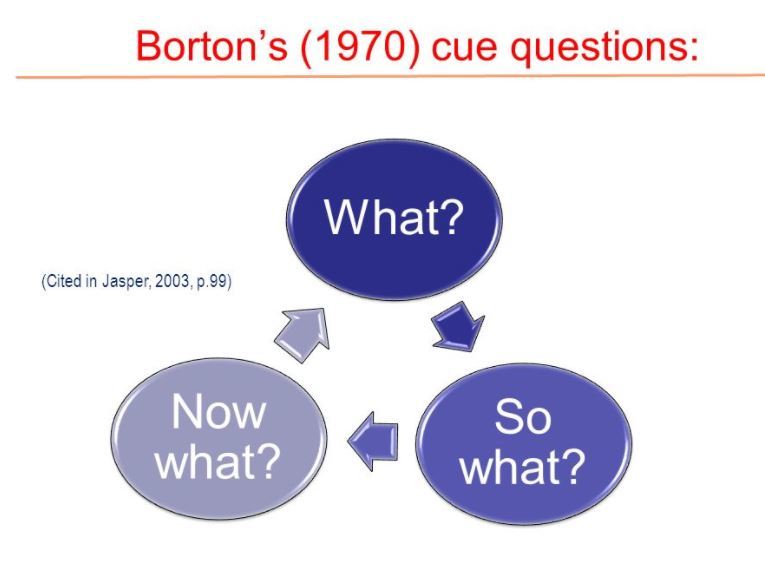 Developed in 1970 by Terry Borton, Borton’s Development Framework provides us a straightforward and easy to understand approach to anything. This simple framework involves only three questions, which can easily explain any concept. The questions follow the concept of Reflective Practice, which is the ability to reflect on your actions to engage in the process of learning.[2] Reflective Practice holds three components: Experiences (what happened to you?), Reflective Process (what enables you to learn from the experience?), and Action (what new perspective do you now possess as a result of your reflection?). Borton’s Development Framework possesses the following three questions:
 Metaphorically speaking, if we want to kill a weed, we must first find the root. A root-cause is a factor causing nonconformance and should be permanently eliminated. The root-cause is essentially “the evil at the bottom” that sets things in motion causing the problem. Let’s quickly look at the structure of a problem and break down the definition of root-cause via Asq.org.
 Root-Cause Defined
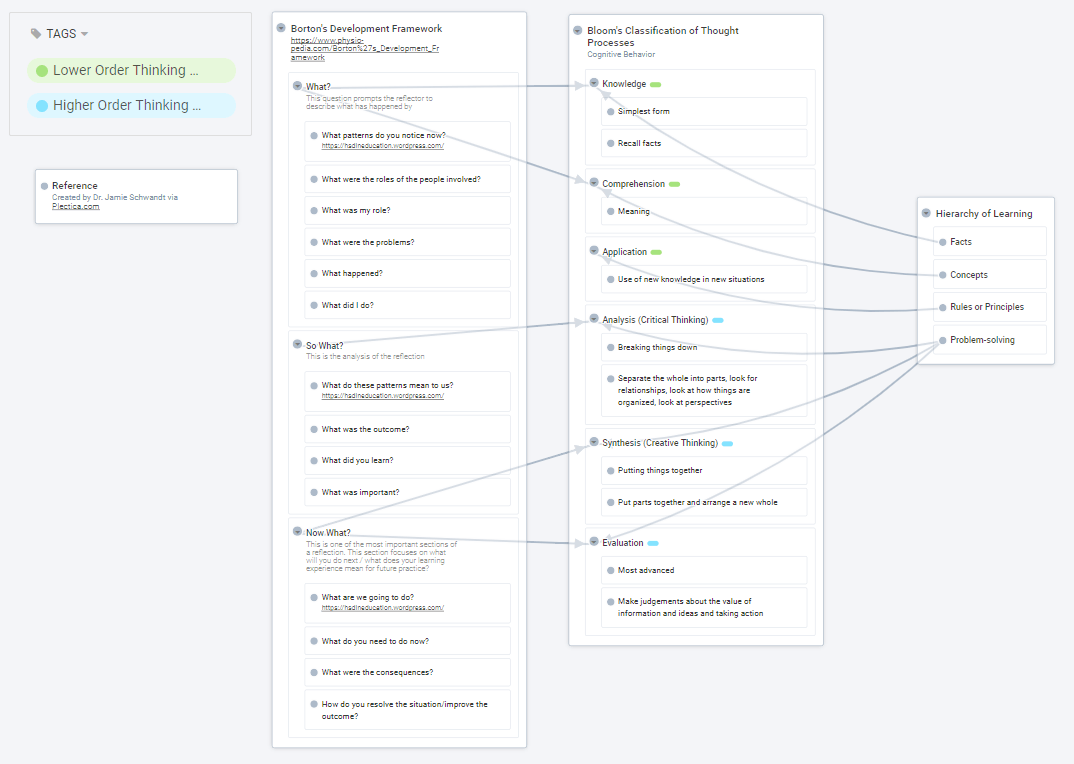 By using my What-Why Method, we also find that we are able to move through Blooms Classification of Thought Process (otherwise known as Blooms Taxonomy), where we can quickly understand and describe a problem or topic. Additionally, my method takes us through the Hierarchy of Learning along with Blooms Taxonomy.
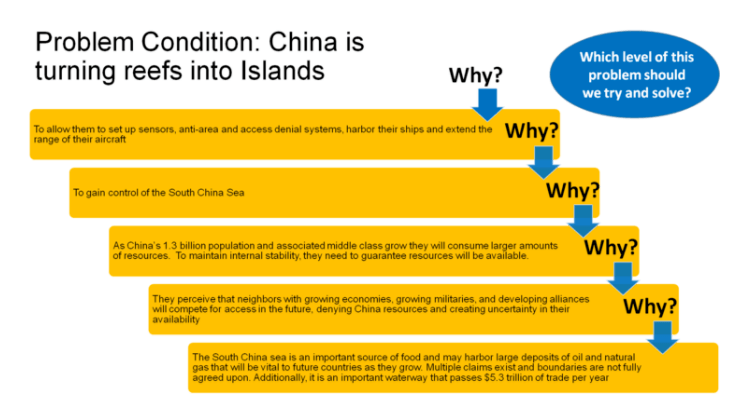
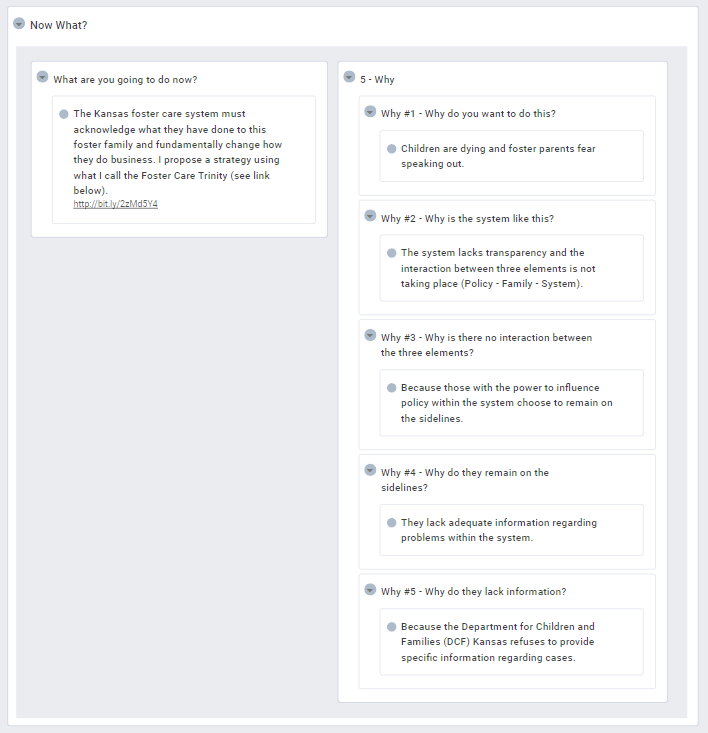
When we bring it all together, we find that we now have a way to quickly solve a problem and quickly present or brief information. It also offers us a way to logically and easily categorize and present information, especially if we are posed with a difficult and impromptu question.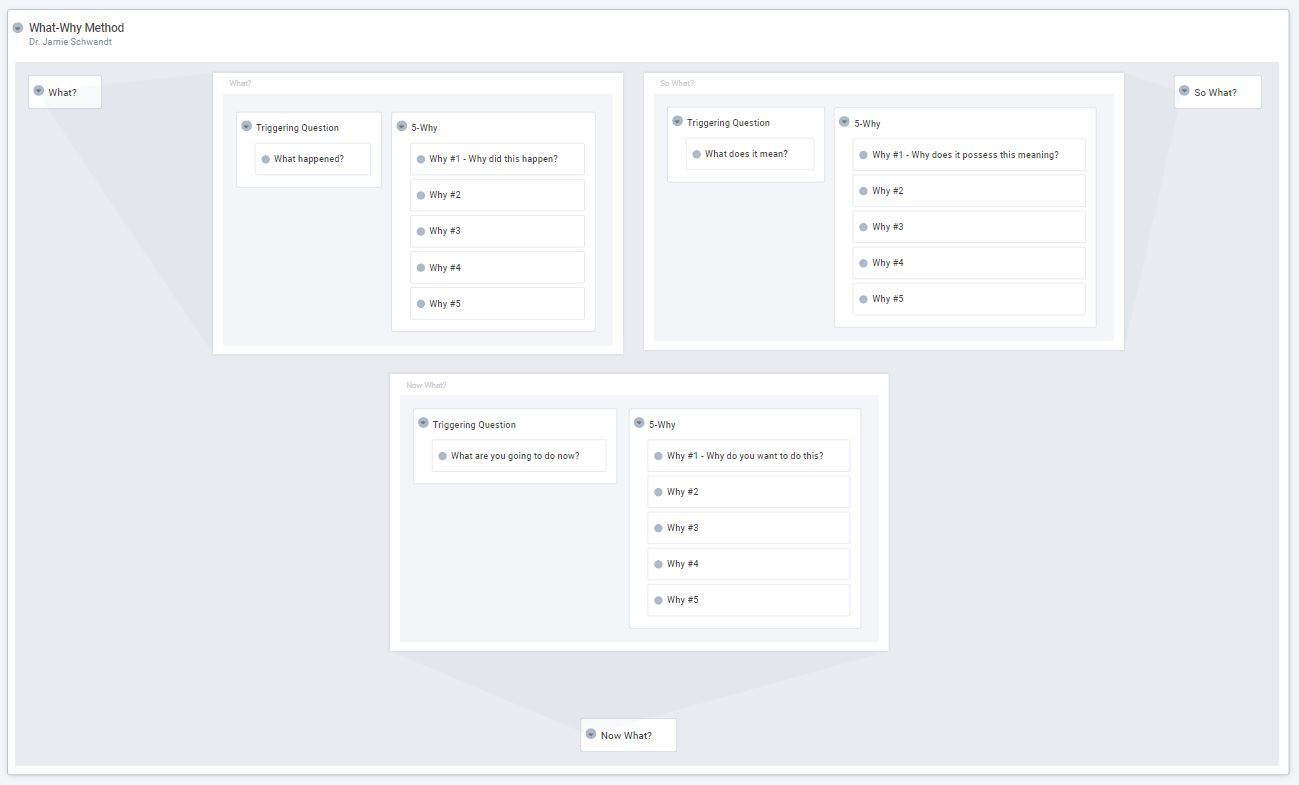 Let’s see how my method works using an example from the foster care system (visit my website for more information on the foster care system). By moving through the questions in the image above (What-Why Method), let’s see what we uncover.
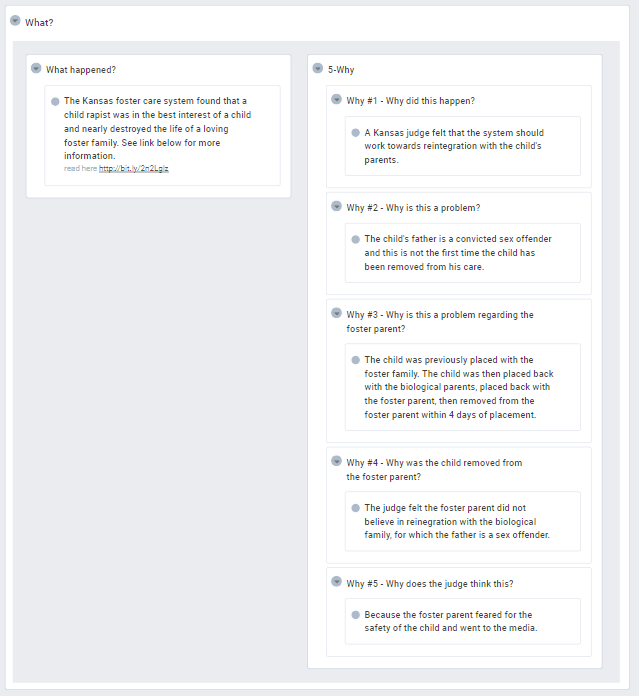
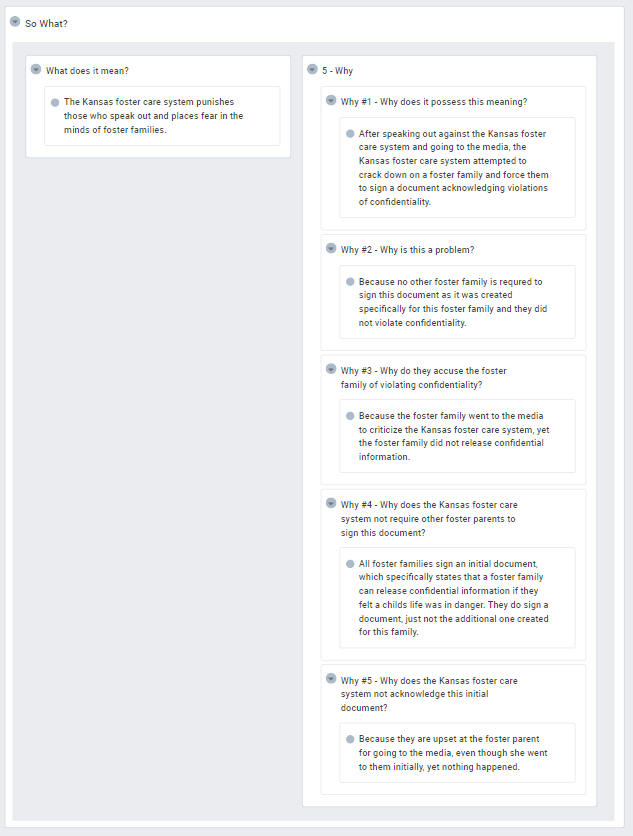
 Lastly, John Driscoll matched Borton’s three questions to the stages of the experiential learning cycle and added trigger questions.[3] By linking trigger questions to Borton’s framework, we are able to produce a clear description of the event, an analysis of the event (critical thinking), and synthesis of the event (creative thinking). Combining the What – So What – Now What framework with the 5-Why technique essentially creates the simplest form of problem-solving in existence. As Wilfred A. Peterson said,
First, Terry Borton’s Development Framework (What – So What – Now What) as the logical explanation tool. Second, the 5-Why technique used in root-cause analysis (RCA) as the simple problem-solving tool. Using Occam’s razor as my underlying principle, I propose a new method called the What–Why Method.
Crazy Simple!
Using the military as an example, we find that numerous problem-solving methods exist within the U.S. military. In the U.S. Army alone, we have a smorgasbord of options to select from. From the Military Decision Making Process (MDMP) to the Army Design Methodology (ADM) to Lean Six Sigma (LSS), we are not short on options. However, if we follow the philosophy of Occam’s razor, we will find that we can slice through the clutter and identify one simple method.Suppose you have two possible explanations for a problem, Occam’s razor demonstrates that the simplest option is typically the best option.[1] Occam’s razor has two parts which serve as the underlying principle of my What-Why Method.
- The Principle of Plurality. Plurality should not be assumed as a fact without necessity.
- The Principle of Parsimony. The scientific principle that things are typically connected or behave in the simplest way.
What – So What – Now What
Developed in 1970 by Terry Borton, Borton’s Development Framework provides us a straightforward and easy to understand approach to anything. This simple framework involves only three questions, which can easily explain any concept. The questions follow the concept of Reflective Practice, which is the ability to reflect on your actions to engage in the process of learning.[2] Reflective Practice holds three components: Experiences (what happened to you?), Reflective Process (what enables you to learn from the experience?), and Action (what new perspective do you now possess as a result of your reflection?). Borton’s Development Framework possesses the following three questions:
- What? The experience.
- So What? Analysis of reflection or process of reflection.
- Now What? Synthesis and new perspectives from reflection. This is where you determine what to do next and what your next action will be.
5-Why Technique
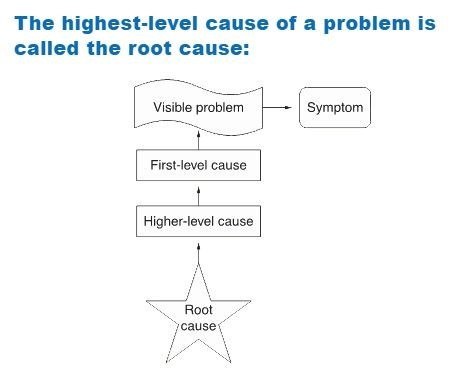
Metaphorically speaking, if we want to kill a weed, we must first find the root. A root-cause is a factor causing nonconformance and should be permanently eliminated. The root-cause is essentially “the evil at the bottom” that sets things in motion causing the problem. Let’s quickly look at the structure of a problem and break down the definition of root-cause via Asq.org.
Root-Cause Defined
- A factor that caused a nonconformance and should be permanently eliminated.
- A factor that influences a result or outcome.
- Must be completely eliminated or removed.
Simple Approach for Thinking
By using my What-Why Method, we also find that we are able to move through Blooms Classification of Thought Process (otherwise known as Blooms Taxonomy), where we can quickly understand and describe a problem or topic. Additionally, my method takes us through the Hierarchy of Learning along with Blooms Taxonomy. When we bring it all together, we find that we now have a way to quickly solve a problem and quickly present or brief information. It also offers us a way to logically and easily categorize and present information, especially if we are posed with a difficult and impromptu question.
Easily Explain Anything
Let’s see how my method works using an example from the foster care system (visit my website for more information on the foster care system). By moving through the questions in the image above (What-Why Method), let’s see what we uncover.
What?
So What?
Now What?
Lastly, John Driscoll matched Borton’s three questions to the stages of the experiential learning cycle and added trigger questions.[3] By linking trigger questions to Borton’s framework, we are able to produce a clear description of the event, an analysis of the event (critical thinking), and synthesis of the event (creative thinking). Combining the What – So What – Now What framework with the 5-Why technique essentially creates the simplest form of problem-solving in existence. As Wilfred A. Peterson said,
See it big and keep it simple.Using the What-Why Method allows us to just that… See it big, yet keep it very simple!