
Travel opens the mind, so they say. This certainly seems to be the case for Roisin Hahessy, a freelance illustrator from Ireland. After moving to Brazil, learning to speak Portuguese and teaching English at the same time, she began to think more about her own language.
Hahessy writes, "When I stopped to think about some English idioms and their literal meaning, I found some of them very funny and thought it would be a nice idea to pick a few of the most common idioms and illustrate them.”
So, she created a series of illustrations depicting ten common English idioms -- that is, phrases whose meanings are not to be taken literally. Her bright, funny illustrations show a quirkier side of our language, and show how the phrases we use might not always make sense to non native English speakers.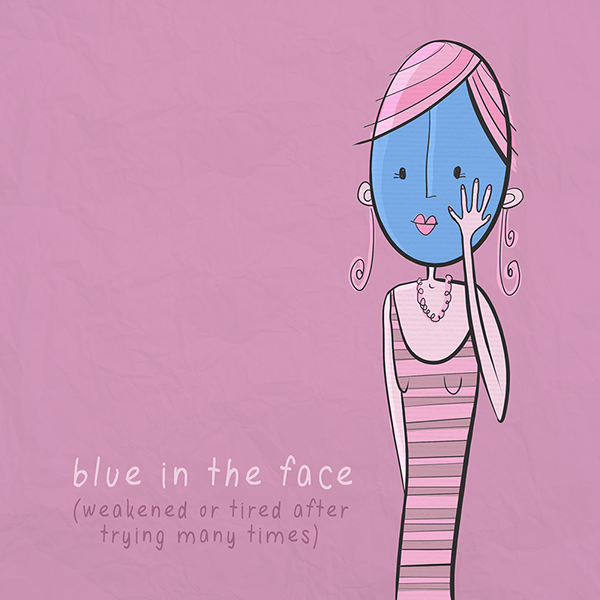 This idiom describes a feeling of great exasperation and frustration. No doubt related to the way your skin goes the blue in the absence of oxygen.
Example usage:
“You can argue until you're blue in the face, but that doesn't make you right."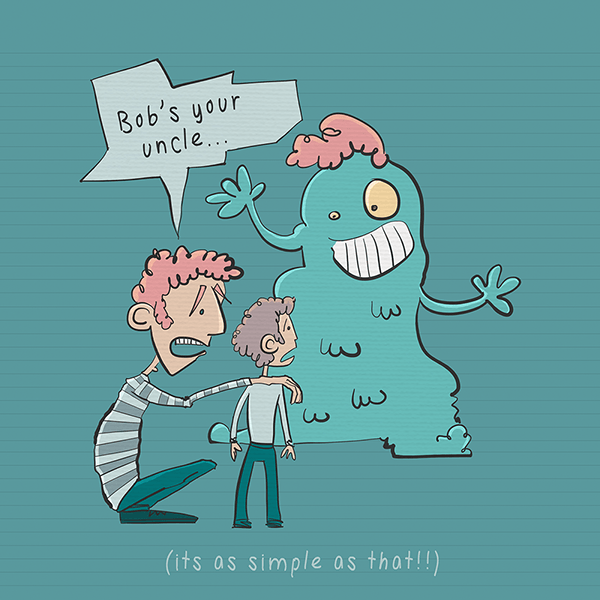 Nobody is really sure who Bob is, but this is a delightful way of expressing how easy something is. It’s also a colloquial way of saying, “it’s done”, "there you go”. Or as the French would say, “ et voila".
(Pro tip: After saying "Bob’s your uncle” you can add “And Fanny’s your aunt".)
Example usage:
“The app is really easy to use. Just press the green button and Bob’s your uncle."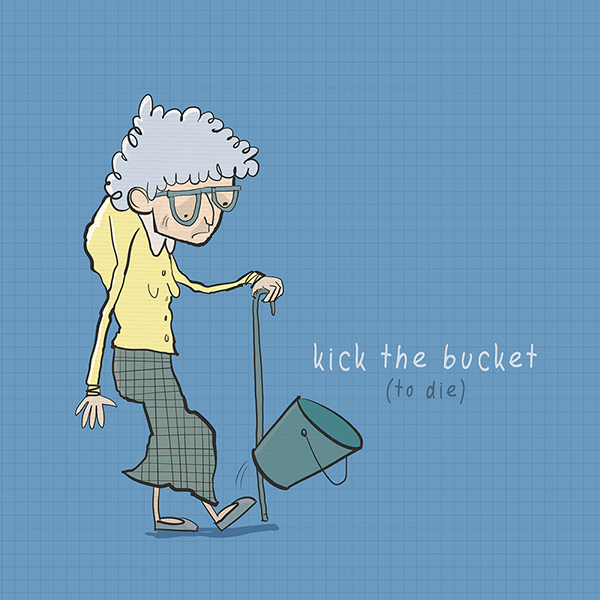 Should only be used in an informal situation. In the wrong context, this idiom can make you sound callous and insensitive.
Example usage:
"My goldfish has been ill for weeks. I think he’s about to kick the bucket."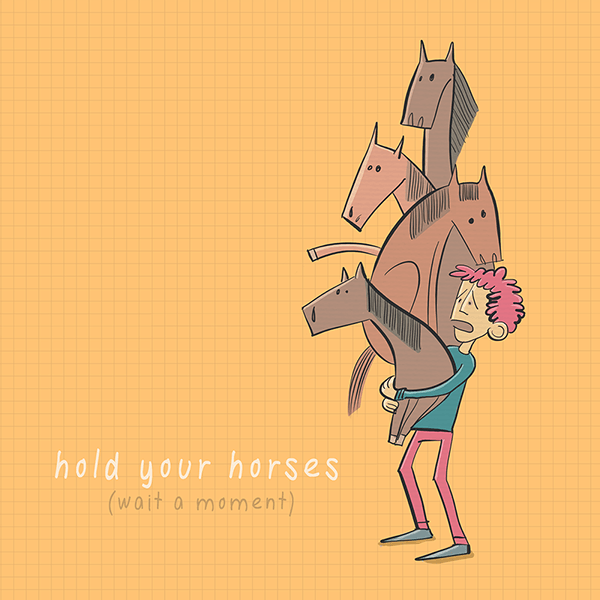 This one has a more literal meaning. Hold up! Stop! Wait! Useful in all situations requiring some urgency.
Example usage:
"Hold your horses. I think we’ve taken a wrong turn. Let me check the map."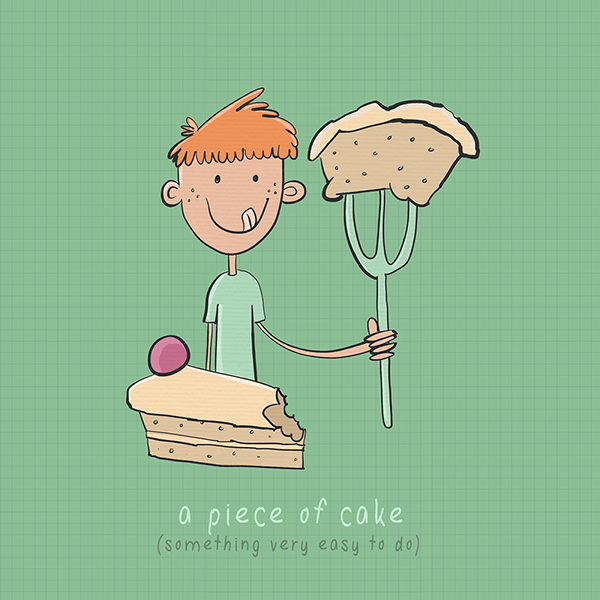 This is similar to the American expression, “a cakewalk”. The origins of this idiom aren’t fully known, but they’re easily understood. I mean, how difficult is it to eat a delicious slice of cake?
Example usage:
"Don’t worry about the entrance exam. You’ll be fine, it’s a piece of cake."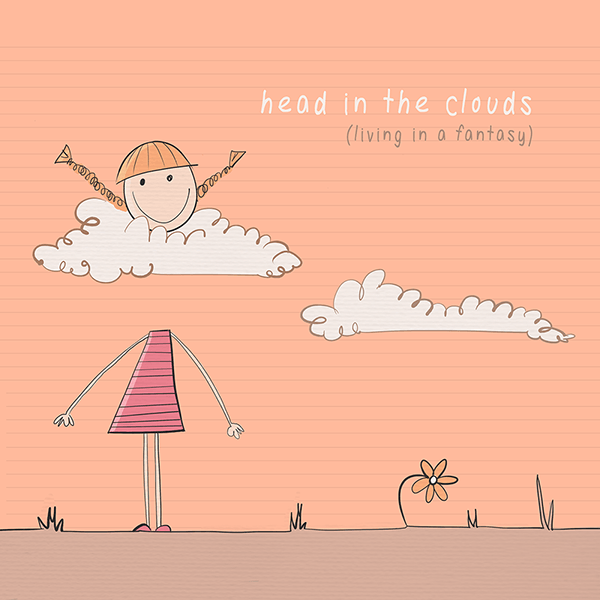 Clouds are synonymous with drifting, daydreaming, loftiness. Having your head in the clouds implies being somehow removed from everyday reality. The opposite of this idiom would be someone who has their “feet on the ground”.
Example usage:
"Sometimes I wonder if John is being realistic about his goals. He always seems to have his head in the clouds."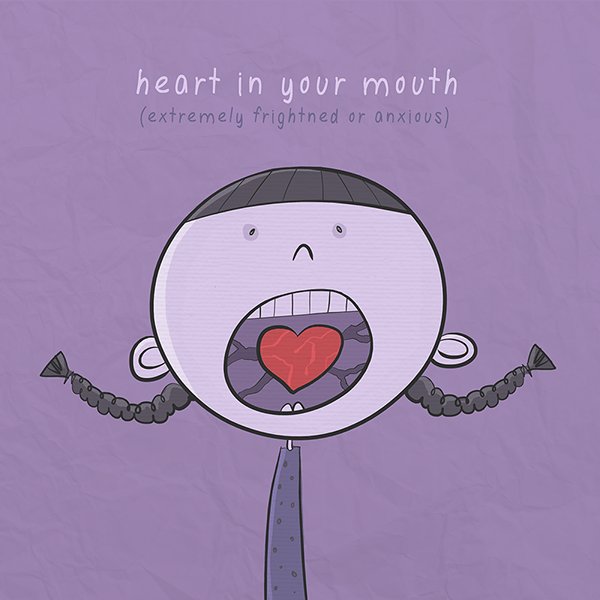 Used to describe visceral fear or stress. The kind that you feel in your whole body. Imagine the aeroplane hatch opening on your first parachute jump. Or someone jumping out in front of you in a dark, dangerous alley at night. You get the picture.
Example usage:
"Have you been on the new rollercoaster? It’s a real heart in your mouth experience."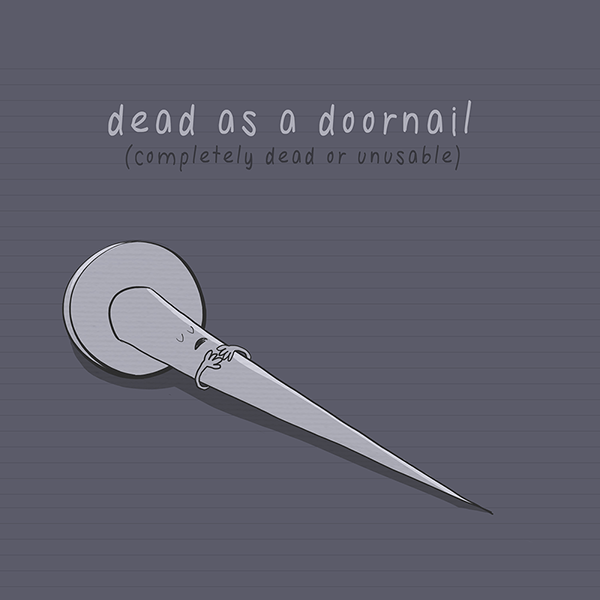 This expression works just as well for objects, as people or animals. Great for describing broken machinery or technology that refuses to respond.
Example usage:
“I was watching TV, and suddenly there was a bang and a puff of smoke. Now it’s dead as a doornail."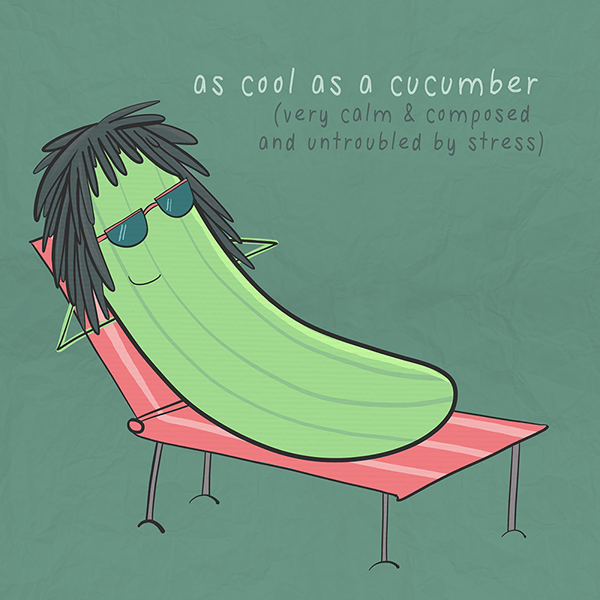 Not to be confused with cool as in hip, trendy or fashionable. This is someone who stays calm when everyone else around is getting anxious and stressed out. A great example is Chesley Sullenberger, the airline pilot who made a miracle emergency landing in the Hudson river in 2009.
Example usage:
“That was a really tense business meeting, but you were as cool as a cucumber."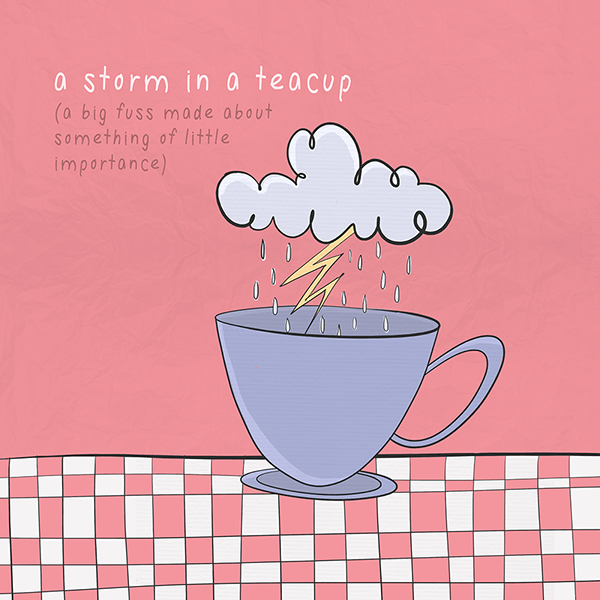 We Brits love drinking tea. So when someone gets upset about a relatively trivial matter, we call it a storm in a teacup. Similar to the equally amusing idiom “mountain out of a molehill”.
Example usage:
“Don't worry, he’s not angry, he’s just making a storm in a teacup."
If you enjoyed this post, you'll find loads more language and communication hacks at Lifehack.org
Hahessy writes, "When I stopped to think about some English idioms and their literal meaning, I found some of them very funny and thought it would be a nice idea to pick a few of the most common idioms and illustrate them.”
So, she created a series of illustrations depicting ten common English idioms -- that is, phrases whose meanings are not to be taken literally. Her bright, funny illustrations show a quirkier side of our language, and show how the phrases we use might not always make sense to non native English speakers.
1. Blue in the face
This idiom describes a feeling of great exasperation and frustration. No doubt related to the way your skin goes the blue in the absence of oxygen.Example usage:
“You can argue until you're blue in the face, but that doesn't make you right."
2. Bob’s your uncle
Nobody is really sure who Bob is, but this is a delightful way of expressing how easy something is. It’s also a colloquial way of saying, “it’s done”, "there you go”. Or as the French would say, “ et voila".(Pro tip: After saying "Bob’s your uncle” you can add “And Fanny’s your aunt".)
Example usage:
“The app is really easy to use. Just press the green button and Bob’s your uncle."
3. Kick the bucket
Should only be used in an informal situation. In the wrong context, this idiom can make you sound callous and insensitive.Example usage:
"My goldfish has been ill for weeks. I think he’s about to kick the bucket."
4. Hold your horses
This one has a more literal meaning. Hold up! Stop! Wait! Useful in all situations requiring some urgency.Example usage:
"Hold your horses. I think we’ve taken a wrong turn. Let me check the map."
5. A piece of cake
This is similar to the American expression, “a cakewalk”. The origins of this idiom aren’t fully known, but they’re easily understood. I mean, how difficult is it to eat a delicious slice of cake?Example usage:
"Don’t worry about the entrance exam. You’ll be fine, it’s a piece of cake."
6. Head in the clouds
Clouds are synonymous with drifting, daydreaming, loftiness. Having your head in the clouds implies being somehow removed from everyday reality. The opposite of this idiom would be someone who has their “feet on the ground”.Example usage:
"Sometimes I wonder if John is being realistic about his goals. He always seems to have his head in the clouds."
7. Heart in your mouth
Used to describe visceral fear or stress. The kind that you feel in your whole body. Imagine the aeroplane hatch opening on your first parachute jump. Or someone jumping out in front of you in a dark, dangerous alley at night. You get the picture.Example usage:
"Have you been on the new rollercoaster? It’s a real heart in your mouth experience."
8. Dead as a doornail
This expression works just as well for objects, as people or animals. Great for describing broken machinery or technology that refuses to respond.Example usage:
“I was watching TV, and suddenly there was a bang and a puff of smoke. Now it’s dead as a doornail."
9. As cool as a cucumber
Not to be confused with cool as in hip, trendy or fashionable. This is someone who stays calm when everyone else around is getting anxious and stressed out. A great example is Chesley Sullenberger, the airline pilot who made a miracle emergency landing in the Hudson river in 2009.Example usage:
“That was a really tense business meeting, but you were as cool as a cucumber."
10. Storm in a teacup
We Brits love drinking tea. So when someone gets upset about a relatively trivial matter, we call it a storm in a teacup. Similar to the equally amusing idiom “mountain out of a molehill”.Example usage:
“Don't worry, he’s not angry, he’s just making a storm in a teacup."
If you enjoyed this post, you'll find loads more language and communication hacks at Lifehack.org