
Back pain can be a real pain in the butt—and no, not just in the figurative sense. If a back issue has ever debilitated you at some point in your life, then you surely know that back pain can radiate to many other different areas of your body. In fact, it can outright frustrate and stop you from carrying out most of your daily routines. However, you can help alleviate back pain by simply stretching.
Now, back pain doesn’t always necessarily arise out of traumas in case you're wondering. While it certainly can, more often than not, it's just from bad posture, sudden movements, and your body's natural wear and tear cycle that will cause most of your back pain issues.
The great news is that the following 7 stretches for back pain can do wonders in getting yourself in shape once again and feeling greater than you ever did before.
Are you ready to try them out for yourself?
Note: If you’re unsure as to the nature of your back pain, it’s advisable to first consult with your physician before engaging in any of these stretches for back pain.
Now, back pain doesn’t always necessarily arise out of traumas in case you're wondering. While it certainly can, more often than not, it's just from bad posture, sudden movements, and your body's natural wear and tear cycle that will cause most of your back pain issues.
The great news is that the following 7 stretches for back pain can do wonders in getting yourself in shape once again and feeling greater than you ever did before.
Are you ready to try them out for yourself?
Note: If you’re unsure as to the nature of your back pain, it’s advisable to first consult with your physician before engaging in any of these stretches for back pain.
1. Supine Hamstring Stretch
You may be wondering what the hamstrings have to do with your back. Well, just like your back pain can radiate to other areas of your body, many times, it's problems with your hips and hamstrings that are at the root of most lower back pain.
Unfortunately, today’s society has most people sitting idle for most of any day and hunched over technological devices. As a result, this can cause your hamstring muscles to shorten over time. The extent to which they do so is then in direct proportion to how active you keep yourself.
Therefore, as your hamstrings shorten and tighten, they will start to pull on the Ischial tuberosity (your “sitting bones”) which extends from the Ischium (the lower part of either side of your pelvis). This can cause a posterior tilt of your pelvis and lead to curvature and rounding of your spine. You will often feel the outcome of this process as lower back pain.
Hence, regularly stretching your hamstrings can reverse the posterior tilt in your pelvis (as the hamstrings lengthen) and improve your posture and any resulting tensions you may be experiencing in the lower back.
Unfortunately, today’s society has most people sitting idle for most of any day and hunched over technological devices. As a result, this can cause your hamstring muscles to shorten over time. The extent to which they do so is then in direct proportion to how active you keep yourself.
Therefore, as your hamstrings shorten and tighten, they will start to pull on the Ischial tuberosity (your “sitting bones”) which extends from the Ischium (the lower part of either side of your pelvis). This can cause a posterior tilt of your pelvis and lead to curvature and rounding of your spine. You will often feel the outcome of this process as lower back pain.
Hence, regularly stretching your hamstrings can reverse the posterior tilt in your pelvis (as the hamstrings lengthen) and improve your posture and any resulting tensions you may be experiencing in the lower back.
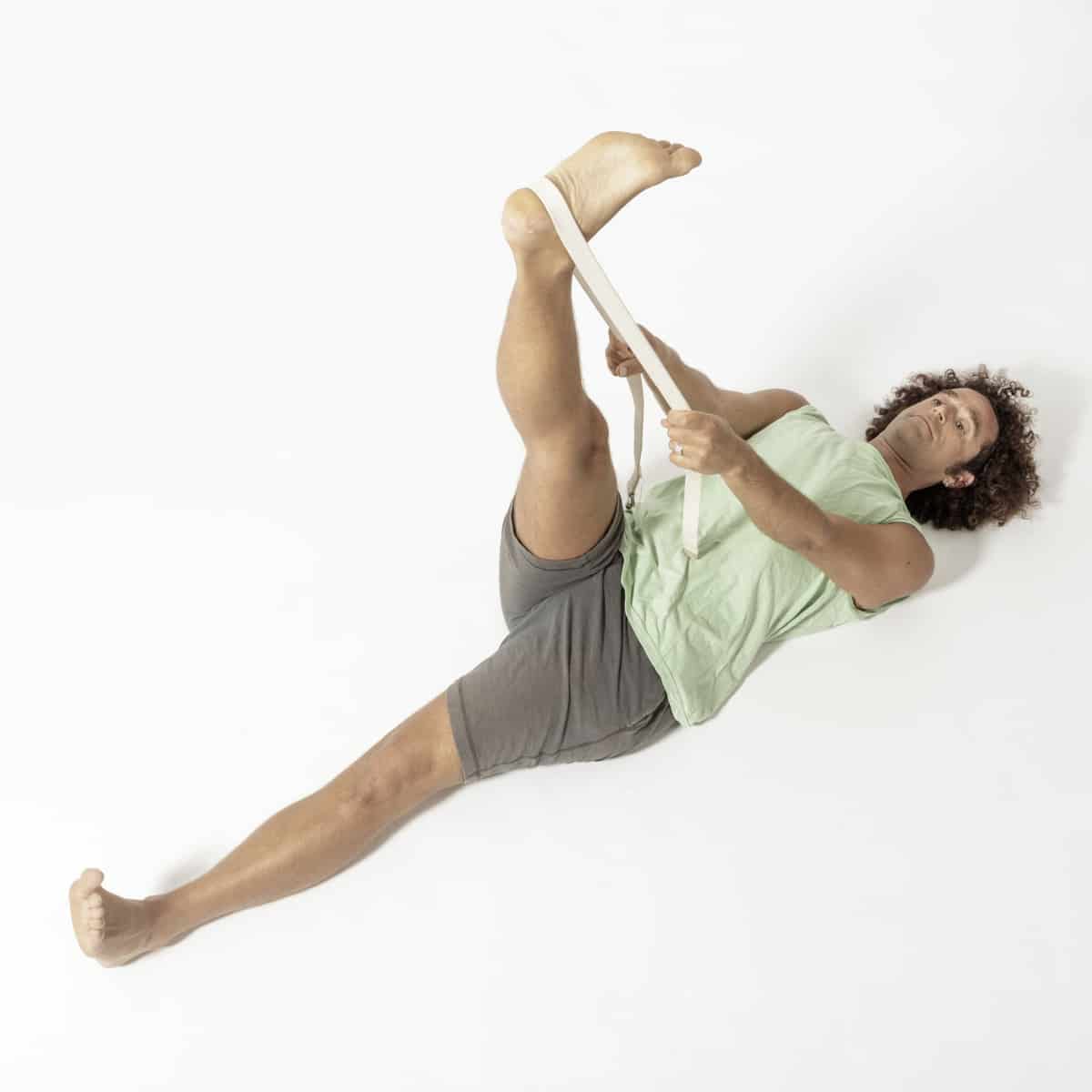
Steps:
- You may want to grab yourself a yoga strap or a small towel to assist you in the stretch.
- Lie flat and straight on your back with both legs firmly on the ground.
- Bring your right knee in towards your chest and secure the towel or strap around the ball of your right foot.
- As you lay back on the ground, grab both ends of your towel or strap with your right hand and gently pull to a gentle point of resistance.
- Next, extend the bent leg straight and upright while keeping the other firmly on the ground and ensure your right foot is flexed pointing down towards you.
- Inhale deeply through your nose and with each exhale, pull gently to your resistance point. You may opt to place your left hand onto your right knee to prevent the upright leg from bending.
- Hold for a minimum of 10 deep breaths and repeat the process on the other side.
2. Piriformis Release Stretch
The Piriformis muscle in your body is another common back pain culprit located in your buttocks. This muscle attaches to your lower spine and its functions are to allow your hip to rotate your leg and your foot to turn outward.
Just like your hamstrings, a tight Piriformis muscle can radiate up to your gluteal region and lower back. In some cases, you may develop Piriformis Syndrome where your sciatic nerve gets compressed by the tightening of the muscle.[1]
The Piriformis muscle most often tightens as a result of bad posture as the Sacroiliac joints on either side of your pelvis start bearing uneven stress. It also shortens and tightens anytime you laterally rotate your thigh.
To give you an example of this, if you have a regular habit of crossing your legs where one ankle rests on the opposite knee, then you could do yourself with the Piriformis release stretch.
Just like your hamstrings, a tight Piriformis muscle can radiate up to your gluteal region and lower back. In some cases, you may develop Piriformis Syndrome where your sciatic nerve gets compressed by the tightening of the muscle.[1]
The Piriformis muscle most often tightens as a result of bad posture as the Sacroiliac joints on either side of your pelvis start bearing uneven stress. It also shortens and tightens anytime you laterally rotate your thigh.
To give you an example of this, if you have a regular habit of crossing your legs where one ankle rests on the opposite knee, then you could do yourself with the Piriformis release stretch.
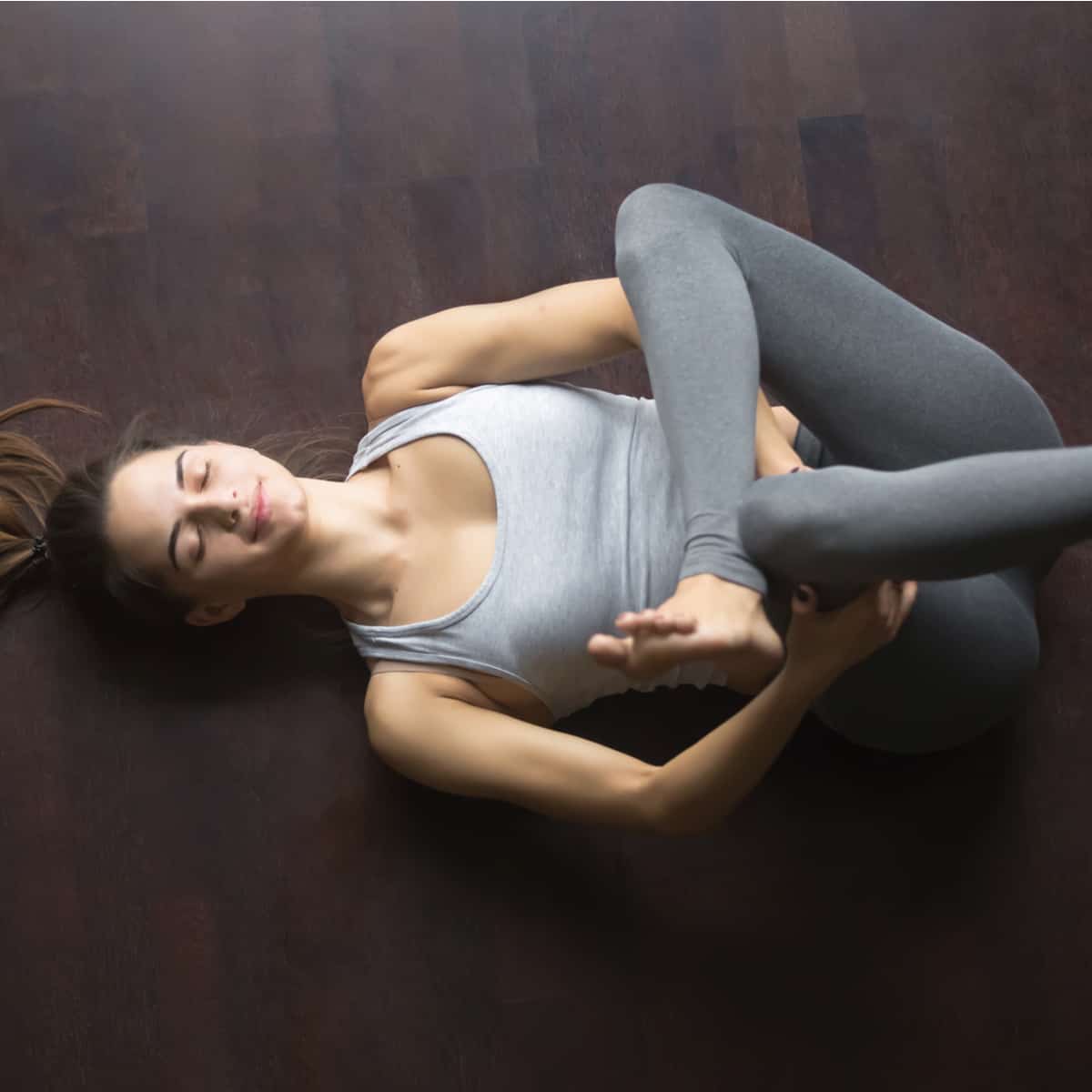
Steps:
- Begin by lying flat on your back with your knees bent and feet on the ground.
- Bring your right knee in towards your chest and grab your right ankle with your left hand.
- Cross your right leg and place your right ankle across and below your left knee while ensuring your right foot is flexed pointing upwards.
- Once in position, lift your left thigh to 90 degrees as you lay flat on your back.
- Remain on your back and grab the top (or underneath) of your left knee with both hands while passing your right hand through the loop opening formed by crossing your legs.
- Breathe in deeply and as you exhale pull your left knee towards your body until a gentle point of resistance.
- Hold for a minimum of 10 deep breaths and repeat the process on the other side.
3. Child’s Pose
Nowadays, a very common back issue is bending down to pick up something and finding yourself unable to move afterward. This could most likely be indicative of a facet joint problem in your back as sudden muscle spasms pull your spine slightly out of alignment. Whether this is your cause or not, one of the popular stretches for back pain you can turn to is one of Yoga’s all-time favorites![2]
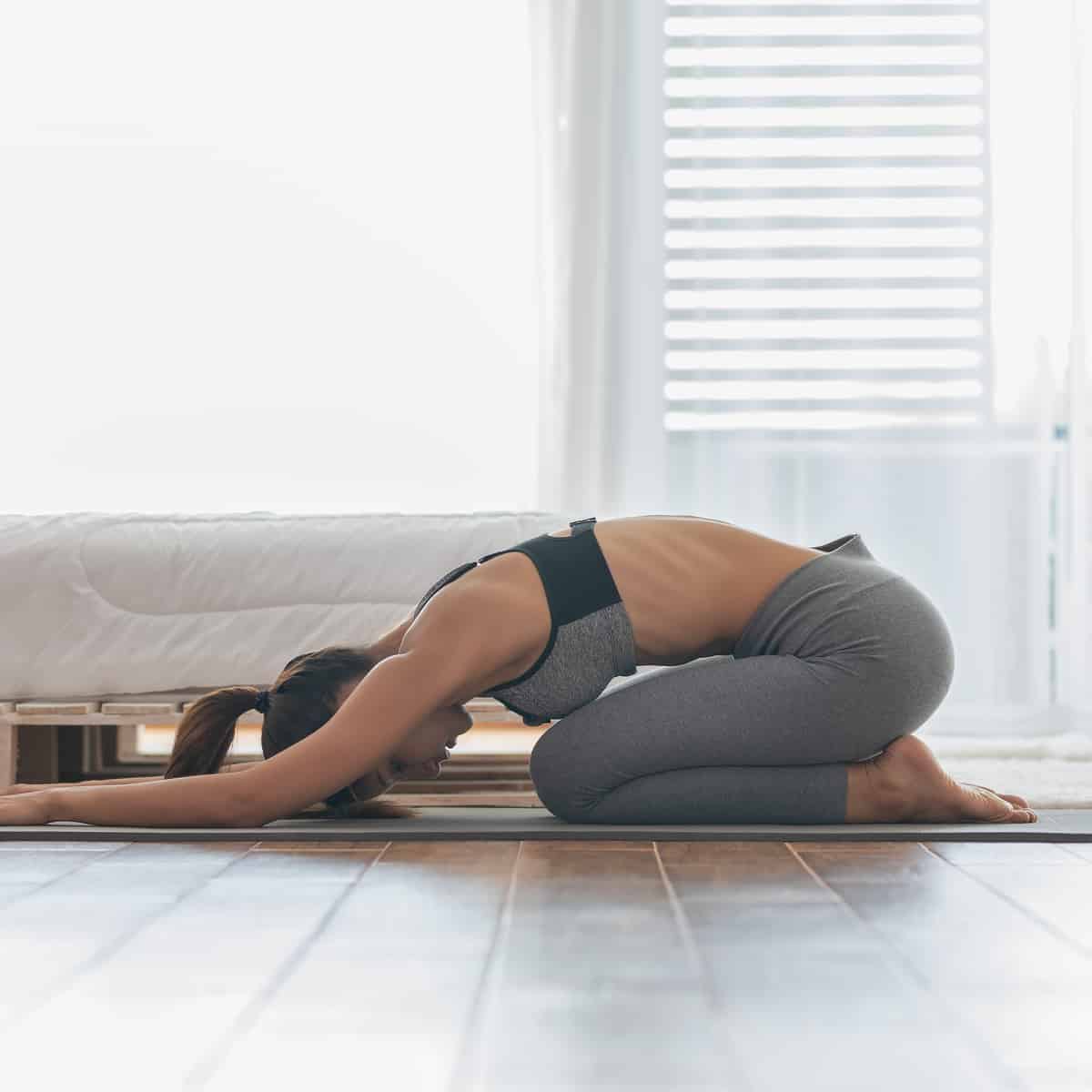
Just like a fetus, Child’s pose naturally curves your spine to release your lower back muscles and re-align you by stabilizing your core muscles. Besides your lower back, you’ll also be able to release tensions in your shoulders, chest, hips, inner thighs, knees, and ankles. Talk about a stress buster! Don't be surprised if you also manage to grab yourself a sound night’s sleep afterward.
Just like a fetus, Child’s pose naturally curves your spine to release your lower back muscles and re-align you by stabilizing your core muscles. Besides your lower back, you’ll also be able to release tensions in your shoulders, chest, hips, inner thighs, knees, and ankles. Talk about a stress buster! Don't be surprised if you also manage to grab yourself a sound night’s sleep afterward.
Steps:
- Come down to the floor onto your knees.
- Sit back on your heels and open your knees slightly beyond hips-width apart.
- Inhale deeply through your nose and elongate your spine.
- As you exhale, start lowering your upper torso and slide your arms out in front of you until your forehead touches the ground.
- Keep sliding your arms out in front of you until you feel comfortable in the position or until you feel a comfortable elongation in your tailbone.
- Given this is a restorative pose, you are free to hold it for up to 3 minutes.
4. Side Bend

Any postural imbalance you develop over the years can build up stress in your lateral back muscles and hips. If you’re one to sit crouched at a desk all day, then your bad posture is likely causing your lateral back muscles to shorten and feel tighter. As a result, you may at times feel like your upper torso is merging deeper into your hips.
Aside from back pain from postural imbalance, tight lateral back muscles can also constrict your lungs’ full breathing capacity. Incorporating a side bend in your daily routine, therefore, will not only relieve your posture and the flexibility of your spine but can also give you many other benefits from improved breathing down to relieving constipation.
Aside from back pain from postural imbalance, tight lateral back muscles can also constrict your lungs’ full breathing capacity. Incorporating a side bend in your daily routine, therefore, will not only relieve your posture and the flexibility of your spine but can also give you many other benefits from improved breathing down to relieving constipation.
Steps:
- Stand tall with your feet slightly apart with your arms relaxed by your side.
- Keep your palms facing down and bring your right arm straight up in line with your shoulder.
- Turn your palm facing upwards and bring your right arm vertically overhead.
- As you exhale, bend your upper body to the left and slide your left arm down the leg as you do so.
- Hold the stretch for a count of 30 seconds.
- As you inhale come back into a neutral position and repeat the process on the other side.
5. Sphinx Pose

This is one of the most popular stretches for back pain! If you have a habit of slouching, then your lower back likely is not feeling too great as it bears constant unnecessary stress to keep your body in balance.
Luckily, the Sphinx pose can do wonders to relieve any tension and consequent pain you may be feeling. The gentle back bending nature of this pose is very therapeutic to your entire back as it can also lengthen and strengthen your spine. In fact, this pose is so therapeutic that it goes beyond muscular tensions!
If you suffer or know someone who suffers from a herniated or bulging disc, then you may want to add Sphinx Pose to the treatment plan. This backbend tends to decompress the spine and can be very effective in pushing a bulging disc back into place.
Remember, consult your physician before trying this alone, especially if you have any spinal injuries not caused by muscular tensions.
Luckily, the Sphinx pose can do wonders to relieve any tension and consequent pain you may be feeling. The gentle back bending nature of this pose is very therapeutic to your entire back as it can also lengthen and strengthen your spine. In fact, this pose is so therapeutic that it goes beyond muscular tensions!
If you suffer or know someone who suffers from a herniated or bulging disc, then you may want to add Sphinx Pose to the treatment plan. This backbend tends to decompress the spine and can be very effective in pushing a bulging disc back into place.
Remember, consult your physician before trying this alone, especially if you have any spinal injuries not caused by muscular tensions.
Steps:
- Lie on your belly with your legs side by side and your tail bone pointing down towards your heels to protect your lower back.
- Rotate your inner thighs inwards while keeping your tailbone pointing down.
- Bring your elbows in line and under your shoulders and place your forearms on the ground parallel to each other.
- Inhale and lift your upper torso into a gentle backbend while firmly pressing into your palms.
- Ensure your chest and abdomen are off the ground and elongate the neck to bring the ears away from the shoulders.
- Hold for a count of 10 deep breaths while gazing upwards.
6. Reclined Spinal Twist
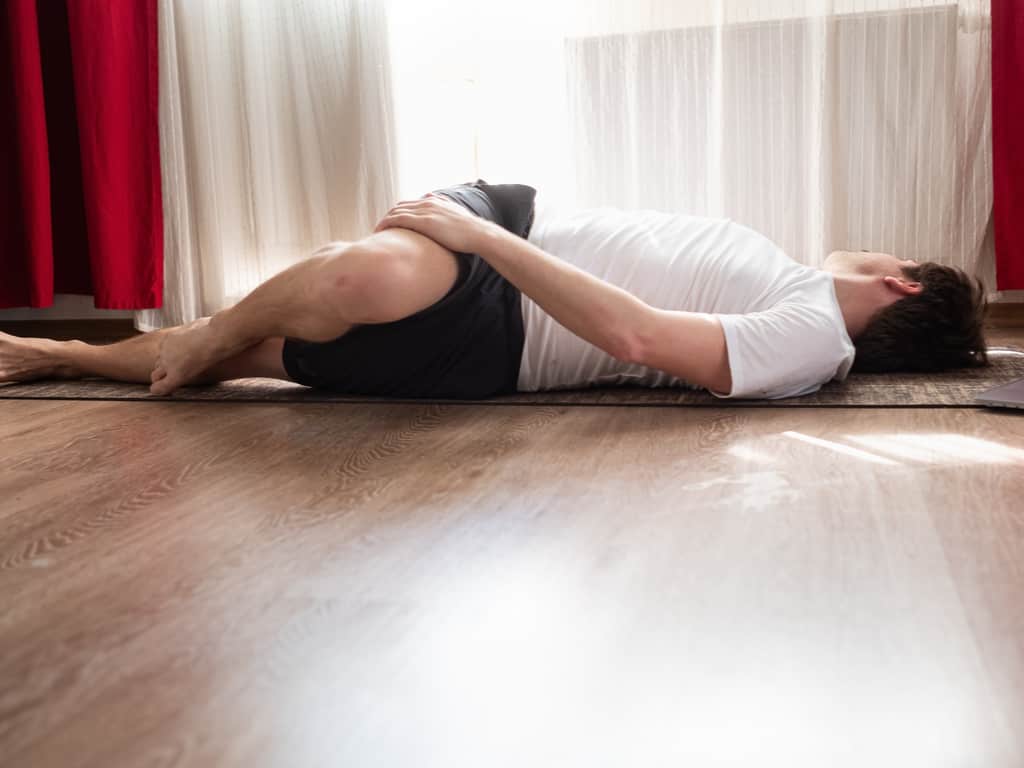
Ever squeezed a sponge or a wet towel before? Well, just like the above, the reclined spinal twist feels great and does wonders in decompressing and elongating your spine as well as releasing the lower back. Not only that, but your digestion also stands to improve as the twisting movement expels toxins from within your digestive organs!
Given this pose involves a twisting movement of the spine, it would be best to avoid it if you have a spinal injury.
Given this pose involves a twisting movement of the spine, it would be best to avoid it if you have a spinal injury.
Steps:
- Lay flat on your back with both arms by your side.
- Pin your right shoulder to the ground and open your right arm out to the side.
- Bring your right knee in towards your chest and grab the exterior of the right knee with your left hand.
- Inhale and elongate the spine and with the exhale bring your left knee down to your left side while ensuring your upper body and right shoulder are pinned to the ground.
- Hold for a minimum of 10 deep breaths and repeat on the other side.
7. Happy Baby Pose
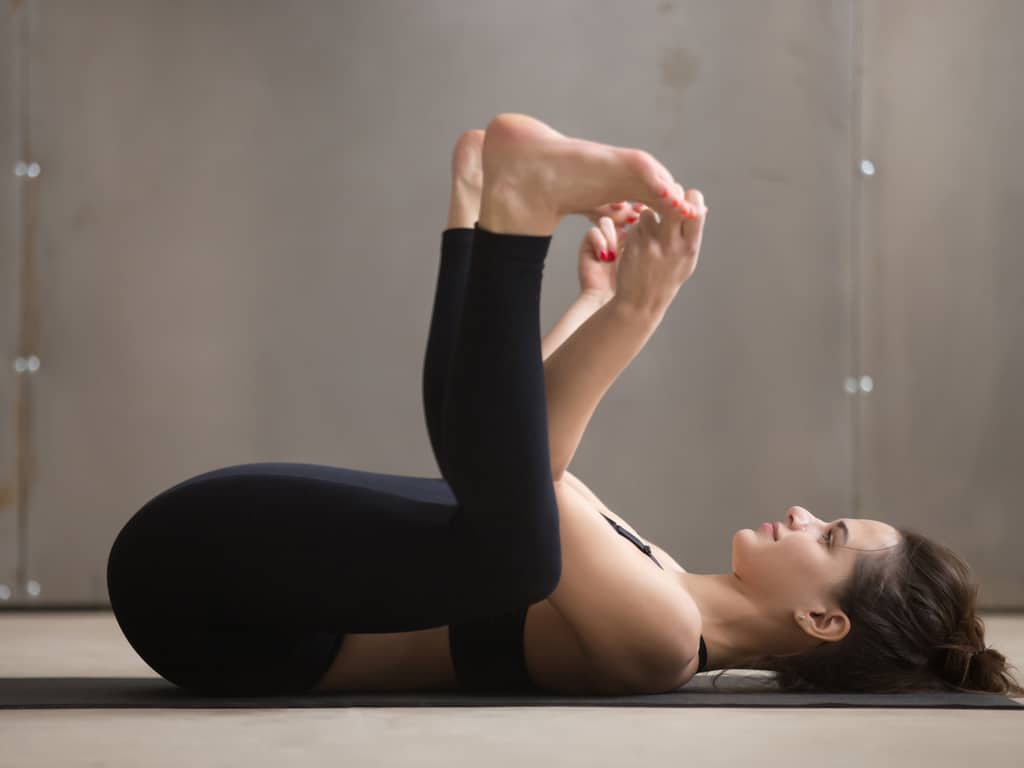
There’s a reason babies are so happy in their prams. After all, who wouldn’t be with vital organs, an enhanced mood, flexible hips, and a strong pelvis to support the spine? Happy Baby Pose ticks many boxes and especially the one about releasing any lower back pain you may be experiencing. This pose does so by strengthening your lower back muscles and realigning your spine.
Given you need to reach your toes for this one, you may wish to have a strap or towel handy to assist you.
Besides back pain, you have a ton of other stress-busting and wellness benefits to gain from and look forward to. Just pick your favorite pose from the list above or even better assign all of the above 7 poses to each day of the week. I promise you, they won’t take you longer than 5 minutes a day.
Ask yourself, is 5 minutes a day of self-care worth preventing a few weeks, months, or years of chronic unnecessary back issues? I’m sure you’ve already got your answer. So, get stretching!
Given you need to reach your toes for this one, you may wish to have a strap or towel handy to assist you.
Steps:
- Lie on your back and bring your knees in towards your chest.
- Grab your feet from the edges or each one of your big toes. If you can’t reach your feet, then use the strap or towel to make a loop around your feet.
- Now open your knees hip-width apart and raise the knees as far up your body as you can while lifting the feet upright.
- Settle each ankle above each knee and flex the feet to be pointing down towards the ground.
- Hold for a minimum of 10 deep breaths or up to 60 seconds.
Takeaway
So, there you have it, seven gentle and effective stretches for back pain. Granted tensions can be a nuisance at times, but with the above stretches for back pain, you have the ability to make your body work for you. If you wish to gain longer-term benefits and prevent any unnecessary pain from arising, then it's strongly suggested you make the above a daily ritual.Besides back pain, you have a ton of other stress-busting and wellness benefits to gain from and look forward to. Just pick your favorite pose from the list above or even better assign all of the above 7 poses to each day of the week. I promise you, they won’t take you longer than 5 minutes a day.
Ask yourself, is 5 minutes a day of self-care worth preventing a few weeks, months, or years of chronic unnecessary back issues? I’m sure you’ve already got your answer. So, get stretching!